
Trust Your Gut… or Trust Your Emotions?
chiropractic, healing, meditation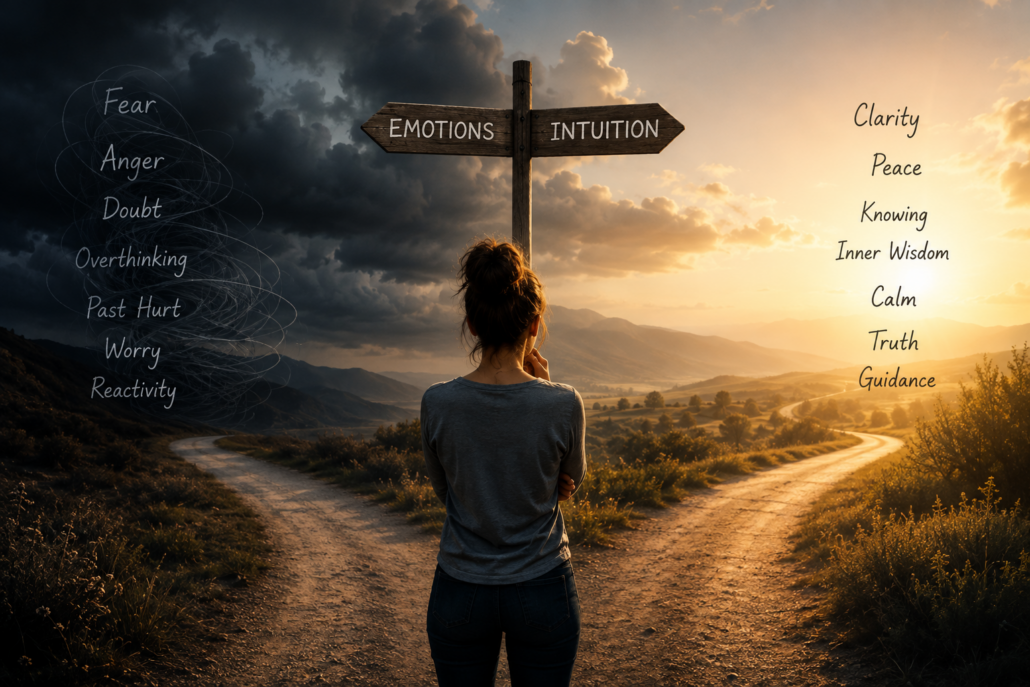
“I always trust my gut.”
People say that all the time, but what does it really mean?
We’ve all experienced those moments when something doesn’t feel right. You can’t explain it logically, but deep inside, something is telling you to slow down, pay attention, or choose a different path.
Then there are the other moments.
You’re angry.
Hurt.
Frustrated.
Anxious.
Your mind races. You replay conversations over and over. You imagine worst-case scenarios. One negative thought becomes twenty, and before long your entire day has been hijacked.
So which one should you trust?
Your emotions…
or your gut?
Your Gut Was Designed to Protect You
Long before you consciously analyze a situation, your nervous system is already collecting information.
Your brain is constantly monitoring subtle signals from your environment and from within your own body. Researchers call this interoception—your ability to sense what’s happening inside yourself. Your heart, breathing, digestive system, and nervous system continuously communicate with your brain, helping you make rapid decisions, often before you’re consciously aware of them.
That’s why intuition often feels quiet.
It doesn’t usually scream.
It whispers.
It simply says:
“Something isn’t right.”
Or…
“This feels like the right direction.”
Emotions Aren’t the Enemy
Emotions serve an important purpose.
They tell us we’ve experienced something meaningful.
But emotions are also shaped by our past.
If you’ve been betrayed before, you may distrust someone who has done nothing wrong.
If you’ve experienced rejection, you may interpret silence as abandonment.
If you’ve lived with fear, your brain may begin seeing danger where none exists.
In other words, emotions often tell us more about our history than our present.
They aren’t necessarily lying to us—but they aren’t always telling us the whole truth either.
Your Brain Replays Old Programs
One of the central ideas in my upcoming book, Happiness Rewired, is that much of our behavior is driven by subconscious belief systems I call Energy Programs™.
These programs are created by past experiences, repeated thoughts, emotional events, and beliefs we’ve accepted as truth.
Over time they become automatic.
Someone says one sentence…
A memory is triggered…
An old belief activates…
An emotion follows…
And before you know it, you’re reacting to something that may have happened decades ago—not what’s happening right now.
Many people believe they’re reacting to life.
Often they’re reacting to their programming.
So How Do You Tell the Difference?
Here’s a simple way to begin noticing the difference.
Emotions usually feel:
- Loud
- Urgent
- Reactive
- Repetitive
- Focused on proving a story
Intuition usually feels:
- Quiet
- Calm
- Clear
- Simple
- Present
Fear argues.
Intuition observes.
Fear pushes.
Intuition guides.
Fear demands an immediate reaction.
Intuition patiently waits for you to listen.
A Simple Exercise
The next time you’re faced with an important decision, don’t answer immediately.
Pause.
Take several slow breaths.
Ask yourself:
“Is this coming from fear… or from knowing?”
Then notice your body.
Do you feel tension?
Or clarity?
Is your mind trying to convince you?
Or does the answer simply feel peaceful?
Sometimes your greatest wisdom isn’t the loudest voice.
It’s the quiet one you’ve been ignoring.
Learning to Trust Yourself Again
Many of us have spent years listening to everyone else’s opinions while disconnecting from our own inner guidance.
Learning to trust your gut isn’t about ignoring logic or pretending emotions don’t matter.
It’s about recognizing that emotions can be influenced by old subconscious programming, while intuition often reflects a deeper awareness that’s been collecting information all along.
The more you identify and rewrite limiting belief systems, the less emotional noise there is.
And when the noise quiets…
your intuition becomes much easier to hear.
So the next time you’re faced with a difficult decision…
Don’t just ask yourself what you’re feeling.
Ask yourself what’s true.
Sometimes the quietest voice inside you knows the way long before your mind catches up.
About Dr. Ken Best, D.C.
Dr. Ken Best has spent more than 35 years helping patients uncover the underlying causes of pain, dysfunction, and chronic health challenges through Applied Kinesiology, functional assessment, and holistic healthcare. His work integrates biomechanics, nervous system regulation, nutrition, and the influence of subconscious belief systems to help patients move toward greater health and resilience.
If you’d like to learn more about Dr. Ken Best’s approach—or schedule an appointment—visit DrKenBest.com.
- Learn more about Applied Kinesiology and how it helps identify underlying dysfunction before symptoms become chronic.
- Meet Dr. Ken Best, D.C. and learn about his approach to integrative healthcare. to begin your personalized care plan.
- Schedule an Appointment to begin your personalized care plan.
Medical Disclaimer
This article is intended for educational purposes only and should not be interpreted as medical advice or as evidence that any single intervention can prevent, treat, or cure cancer. Dr. Ken Best’s experience reflects his personal journey. Decisions regarding diagnosis and treatment should always be made in consultation with your physician or qualified healthcare team.