
PIR Hamstring Stretch: Improve Flexibility and Relieve Low Back Pain Naturally
back pain, chiropractic, exercise, healing, sports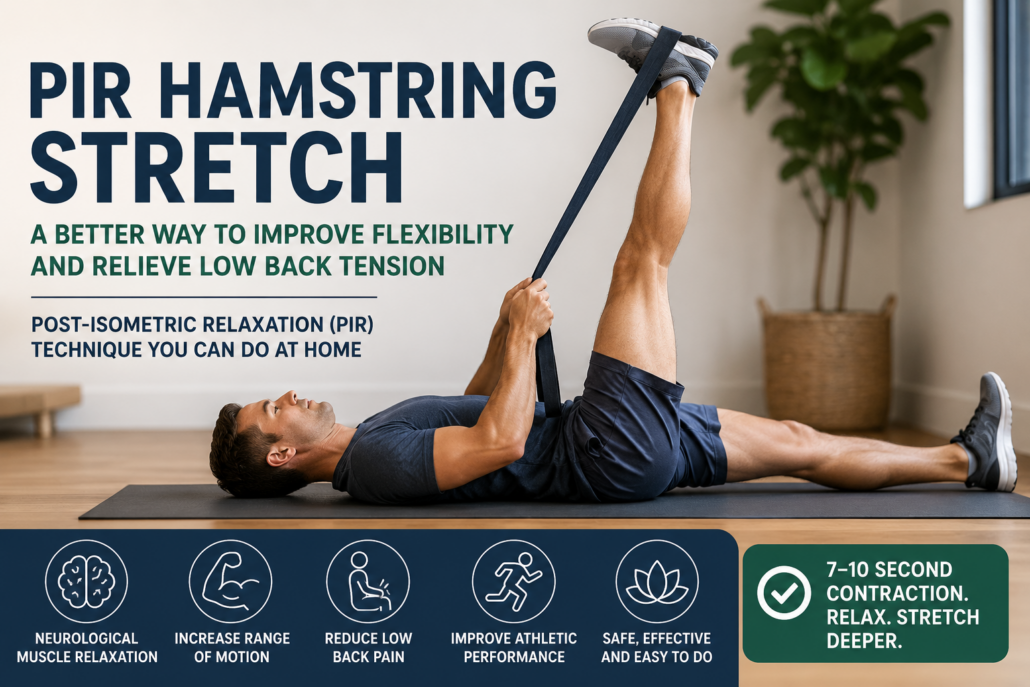
Stretch Your Hamstrings the Right Way: The PIR Technique That Can Help Relieve Low Back Pain
Tight hamstrings are one of the most overlooked causes of low back pain, reduced mobility, poor posture, and limited flexibility.
While most people stretch by simply pulling on the muscle, research and advanced manual therapy techniques suggest there’s a much more effective way to improve flexibility.
In this video, Dr. Ken Best, Doctor of Chiropractic and Applied Kinesiologist, demonstrates a powerful stretching method known as Post-Isometric Relaxation (PIR)—a muscle energy technique that helps your body naturally relax tight muscles so you can achieve a deeper, safer stretch.
Whether you’re an athlete, runner, weightlifter, office worker, or simply someone struggling with stiffness, this technique may help improve hamstring flexibility while reducing unnecessary tension on your lower back.
⸻
Why Tight Hamstrings Can Cause Low Back Pain
Your hamstrings attach to the pelvis. When they become chronically tight, they can pull the pelvis out of its natural position, limiting hip mobility and placing additional stress on the lumbar spine.
Common symptoms associated with tight hamstrings include:
- Low back tightness
- Difficulty bending forward
- Hip stiffness
- Reduced athletic performance
- Poor posture
- Muscle imbalance
- Increased risk of injury
- Sciatica-like symptoms in some individuals
Many people continually stretch their hamstrings but never experience lasting improvements because they aren’t addressing how the nervous system controls muscle tension.
⸻
What Is Post-Isometric Relaxation (PIR)?
Post-Isometric Relaxation (PIR) is an advanced muscle energy technique frequently used in:
- Applied Kinesiology
- Chiropractic care
- Sports medicine
- Physical rehabilitation
- Manual therapy
- Osteopathic medicine
Rather than forcing a muscle into a painful stretch, PIR works with your nervous system.
The basic process is simple:
- Stretch the hamstring until you feel gentle resistance.
- Contract the hamstring by pushing against resistance for 7–10 seconds.
- Completely relax.
- Immediately move into the new range of motion.
- Repeat 2–3 times.
After the muscle contracts, specialized sensory receptors help reduce muscle guarding, allowing the muscle to lengthen more comfortably.
This neurological response often creates significantly greater flexibility than traditional static stretching alone.
⸻
How to Perform the PIR Hamstring Stretch at Home
One of the best parts about this technique is that you don’t need a therapist.
You’ll Need:
- A yoga strap
- Stretching strap
- Resistance strap
- Towel (in some cases)
Instructions
Step 1: Lie on your back.
Step 2: Place the strap around the bottom of your foot.
Step 3: Raise your leg until you reach a comfortable stretch.
Step 4: Push your heel downward into the strap without allowing the leg to move.
Hold this contraction for 7–10 seconds.
Step 5: Completely relax.
Step 6: Pull the strap slightly farther until you reach the new range of motion.
Repeat the process 2–3 times.
Many patients notice an immediate increase in flexibility.
⸻
Why This Technique Works Better Than Traditional Stretching
Traditional stretching often focuses only on the muscle itself.
PIR addresses both the muscle and the nervous system.
Instead of fighting muscle tension, you’re encouraging the nervous system to temporarily reduce muscle tone, allowing a deeper and more comfortable stretch.
This often leads to:
- Better flexibility
- Improved range of motion
- Less muscle guarding
- Reduced low back tension
- Better hip mobility
- Improved athletic movement
- More efficient recovery after exercise
⸻
What About PIRP?
You may also hear practitioners discuss PIRP (Post-Isometric Relaxation Procedures or Protocols) depending on their clinical training.
PIRP generally refers to using the same neurological relaxation principles within a broader treatment protocol that may include:
- Joint mobilization
- Muscle balancing
- Applied Kinesiology evaluation
- Functional movement assessment
- Corrective exercise
- Soft tissue therapy
While terminology varies among healthcare providers, the underlying goal remains the same: helping muscles relax through controlled contraction before stretching.
⸻
How Applied Kinesiology Uses PIR
Applied Kinesiology evaluates how muscles, joints, and the nervous system work together.
Rather than simply treating pain, practitioners look for functional movement restrictions that may contribute to chronic tightness or compensation patterns.
PIR is commonly used alongside Applied Kinesiology to help:
- Improve muscle balance
- Restore normal movement patterns
- Increase flexibility
- Reduce compensations
- Improve posture
- Support healthy biomechanics
When combined with individualized assessment, these techniques may help address the underlying causes of recurring muscle tightness instead of only treating the symptoms.
⸻
Frequently Asked Questions
Is PIR better than static stretching?
Many clinicians find PIR to be more effective because it works through the nervous system instead of relying solely on passive stretching. Results vary by individual.
How long should I contract the muscle?
Approximately 7–10 seconds, followed by complete relaxation before moving into the next stretch.
How many repetitions should I perform?
Most people benefit from 2–3 repetitions per side.
Can tight hamstrings contribute to back pain?
Yes. Tight hamstrings can affect pelvic positioning and increase stress on the lower back, although back pain has many possible causes and should be evaluated if persistent.
Do I need someone to help me?
No. A simple yoga strap allows you to perform this technique safely at home.
⸻
Final Thoughts
If you’ve been stretching your hamstrings for months without seeing much improvement, the problem may not be your flexibility—it may be your technique.
Using Post-Isometric Relaxation (PIR) helps your nervous system relax the muscle before stretching, often allowing greater range of motion with less discomfort.
This simple method is widely used by chiropractors, Applied Kinesiologists, rehabilitation specialists, and sports medicine professionals because it combines muscle physiology with neurological principles for more effective stretching.
If you’re experiencing chronic hamstring tightness, reduced mobility, or recurring low back discomfort, a comprehensive evaluation by a qualified healthcare provider can help determine whether techniques like PIR are appropriate for your specific condition.
____
Disclaimer: This article is for educational purposes only and is not intended to diagnose or treat any medical condition. If you have persistent pain or an existing injury, consult a qualified healthcare professional before beginning any new stretching program.
Dr. Ken Best, D.C.
ManyLevels Healing®
By Appointment Only
Los Angeles, California
- About Dr. Ken Best
- Applied Kinesiology
- Sciatica
- Herniated Discs
- Psoas Muscle
- Neck Pain
- Sports Injuries
- Laser Therapy
- Posture
- Contact
- Book Appointment
- Blog
National Institute of Arthritis and Musculoskeletal and Skin Diseases (NIAMS)
Back Pain Information
https://www.niams.nih.gov/health-topics/back-pain
American Academy of Orthopaedic Surgeons (AAOS)
OrthoInfo Patient Education
https://orthoinfo.aaos.org/
Back Pain
https://orthoinfo.aaos.org/en/diseases–conditions/low-back-pain/
Neck Pain
https://orthoinfo.aaos.org/en/diseases–conditions/neck-pain/
American Physical Therapy Association (APTA)
ChoosePT (Patient Education)
https://www.choosept.com/
Guide to Back Pain
https://www.choosept.com/guide/physical-therapy-guide-low-back-pain
- YouTube: https://www.youtube.com/@manylevels
- Instagram: https://www.instagram.com/drkenbest
- TikTok: https://www.tiktok.com/@drkenbest
⸻
Watch Dr. Ken Best demonstrate the PIR Hamstring Stretch and learn how to improve flexibility while helping reduce unnecessary stress on your lower back.
